
What restaurant food often hides
So many restaurant sauces start the same way: onion and garlic in the pan, long before anything else goes in. By the time the plate arrives they've disappeared into the sauce, the rub or the dressing. If you keep a food diary, that's a gap in it.
Where the hidden foods are
This isn't about any one cuisine. It's how cooking works, everywhere. A base of onion and garlic, a dressing with garlic and anchovy, a broth with onion and fish sauce, a rub with onion powder. Here's what some common dishes usually have in them that the plate doesn't show. Recipes vary, so take these as the usual, not the rule, and ask when it matters.
| Dish | Often has | Where it is |
|---|---|---|
| Pad thai | Garlic, shallot, fish sauce | The sauce starts with garlic and shallot. |
| Caesar salad | Garlic, anchovy, wheat | In the dressing and the croutons, not the leaves. |
| Ramen | Garlic, onion, wheat | Most of it is in the broth. The noodles are wheat. |
| Tomato soup | Onion, garlic, cream | Onion and garlic are the base. Cream makes it smooth. |
| Barbecue ribs | Onion, garlic, honey | In the sauce and the rub. |
| Burrito bowl | Onion, garlic, beans | Pico, beans and the seasoning on the rice. |
| Margherita pizza | Garlic, wheat | Garlic cooked into the tomato sauce. |
| Pho | Onion, fish sauce | Charred onion in the broth. |
| Fettuccine alfredo | Cream, garlic, wheat | The sauce is cream and garlic. The pasta is wheat. |
| Hummus plate | Garlic, chickpeas, wheat | Garlic in the hummus, wheat in the pita. |
| Stir-fry | Garlic, onion, soy sauce | In the pan first, then the sauce. |
| Deli sandwich | Onion, garlic, wheat | In the spread and the bread. |
Why it matters for a diary
A food diary counts what you write down. If "ramen" goes in as ramen, the onion and garlic in the broth never get counted, and a food that showed up in half your meals looks like it was barely there. Then the count is wrong in a way you can't see.
The change is small. When you log a meal you didn't cook, add what the dish usually has in it, not only what's on the plate. If you're tracking one food in particular, ask the kitchen. Most will tell you, and their answer beats any list.
How to log a meal you didn't cook
- Log the dish by name, with the time you ate it.
- Add what it usually has in it. Onion and garlic are the common ones, then cream, wheat, beans, honey and fish sauce, depending on the dish.
- Strike anything the kitchen told you isn't in it.
- Log how you feel in the hours after, the same as any other meal, including when nothing happens.
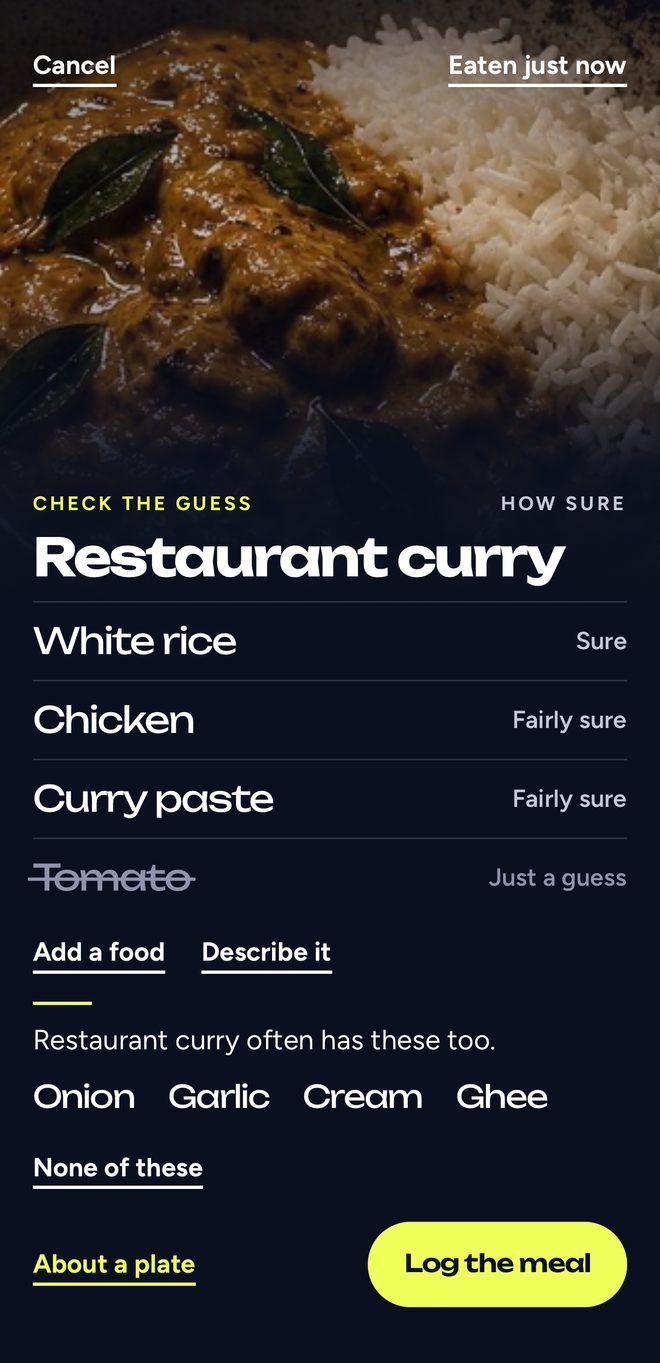
Sample diaryNutrUp asks what the dish usually has in it, whatever the dish.
Eating out is not the problem. Guessing is. A dish logged with its hidden foods counts the same as one you cooked yourself, and over a couple of weeks the count sorts out which of them, if any, your symptoms followed.
Good questions
Why do so many dishes have onion and garlic in them?
Because that's where most cooking starts. Onion and garlic go into the pan first and build the base of a sauce, a stock, a dressing or a rub. By the time the dish arrives they've dissolved into it, which is why the plate doesn't show them.
Does this mean restaurant food is a problem?
No. It means a restaurant meal has more in it than you can see, so a diary that only lists what's on the plate undercounts. Log the dish and what it usually has in it, and let the count decide. Plenty of people's diaries show restaurant meals coming up clear.
Should I ask the restaurant what's in a dish?
If you're tracking one food, yes, and most places will tell you. Recipes vary, so the lists here are what a dish usually has, not what it always has. The kitchen's answer beats the list.
How does NutrUp handle a restaurant meal?
When you photograph a dish, NutrUp asks what it usually has in it, like the onion and garlic in a restaurant curry, with one tap to keep or strike each one, or none of these. Those foods then count like anything else you ate.
NutrUp does the counting.
A food and symptom diary for iPhone. Photograph what you eat, tap how you feel, and in about two weeks see which foods your symptoms followed, with the meals behind each one. No account, and the diary stays on your iPhone. What NutrUp is.
More guides: What to bring your dietitian Why your food diary never told you anything Which app for bloating All guides