
How to reintroduce one food at a time
Coming off elimination is where most diaries fall apart. Everything comes back at once and nothing can be told apart. The way back is one food at a time, with the bookkeeping done properly.
One food, not a group
Add back one food, not a category. "Dairy" is milk, cheese, yogurt, cream and butter, and they don't all behave the same. Pick the one you miss most. Keep everything else as it was for the week.
Small portion first, then a few meals
Start with a small portion. The next day, a normal one. The day after, a big one. A day apart gives each portion its own hours to be followed or not, so you know which one did it. Three meals is the least that says anything. One meal with nothing after it is one meal.
If something moderate or strong follows, stop there and write down which portion it was. A small portion that was fine and a large one that wasn't is a result, and a useful one.
Write down the meals where nothing happened
This is the part people skip, and it's the whole point. Write down the meals where nothing happened as carefully as the ones where something did. Those are the evidence that lets you keep a food. Log every portion with its time, and in the hours after it, how you felt, including nothing. Most of what people notice lands hours later, so give the last portion a full day before you call it.
Wait for a quiet day
Start a food after a quiet day, not the morning after a bad night. If yesterday was rough, you can't tell whether today's symptom is the new food or the tail of yesterday.
How NutrUp does the bookkeeping
NutrUp calls this trying a food again. It names the next food worth trying, usually one your symptoms followed, and shows the plan as three plates that grow: a small portion, a medium one the next day, a large one the day after, with check-ins to day five. It only starts after a quiet day. You tap when you've eaten the portion. At each check-in, "Nothing, I feel fine" is one tap, and so is a symptom with how strong it was. Between them, the food's line fills while nothing follows.
A moderate or strong symptom ends the try. A mild one is kept and doesn't. The result says how far it got: "Nothing followed at any portion.", or that the food was followed when tried again, with a note that the smaller portions were fine when only the large one was. Or choose a food yourself. Trying a food again is on NutrUp Pro. Logging the meals is free either way.
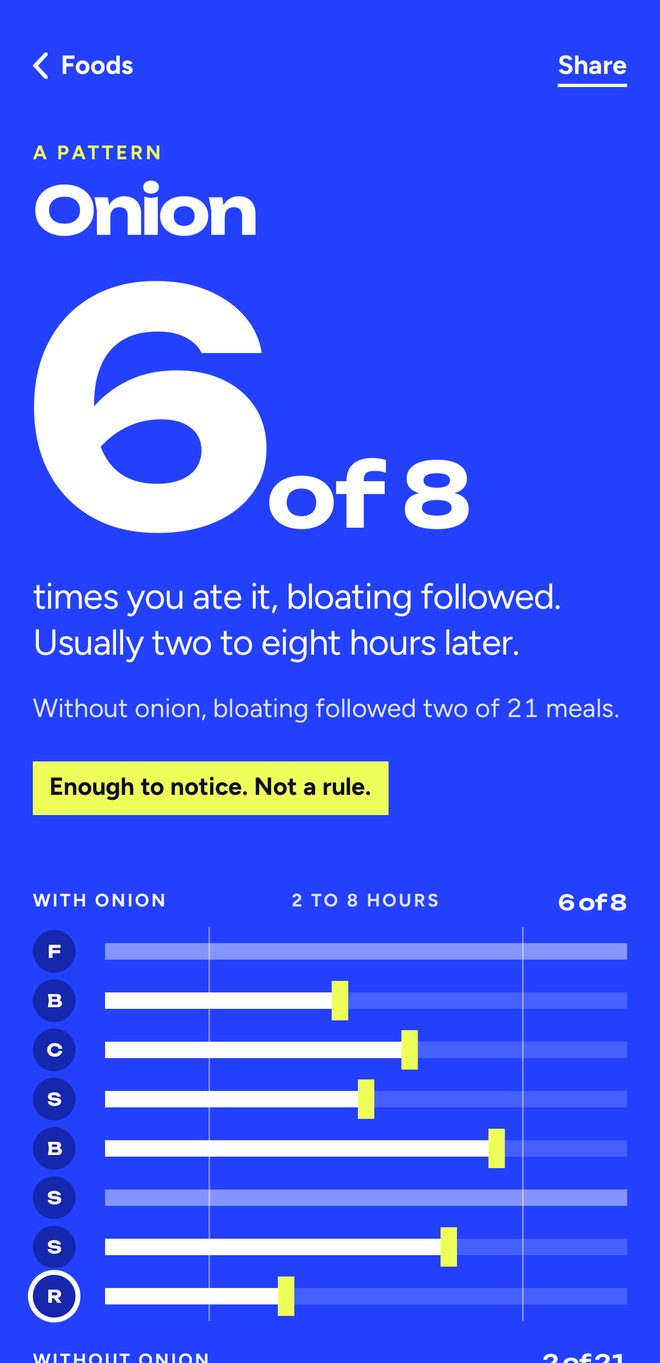
Sample diaryA finding like this one, about two weeks in, is where trying a food again starts.
What a result is, and isn't
A food that was fine at three portions on three days is a food you can eat while you watch the next one. It isn't a promise. A food that was followed is worth a conversation with your doctor or dietitian, with the portions and the hours written down. One page is enough. Either way, you've swapped a guess for a count.
Good questions
How many foods can I reintroduce at once?
One. If you add two foods back in the same week and something follows, you can't tell which one it followed, and you're back to guessing. One food, a few meals, then the next.
How long should I wait between foods?
Give the last portion a full day to be followed or not, then wait for a quiet day with nothing logged before starting the next food. That keeps each result its own.
What if a symptom shows up but it's mild?
Write it down and carry on. A mild symptom is worth recording, but it isn't the reason to stop. A moderate or strong one is. NutrUp uses the same rule.
Do I need to have cut foods out first?
No. The same method checks any food your diary says your symptoms followed. Trying it again on purpose, in growing portions, shows whether it was followed every time or only once. That's a better answer than cutting it for good on one bad night.
NutrUp does the counting.
A food and symptom diary for iPhone. Photograph what you eat, tap how you feel, and in about two weeks see which foods your symptoms followed, with the meals behind each one. No account, and the diary stays on your iPhone. What NutrUp is.
More guides: Why your diary says you react to everything How long after a meal do symptoms show up What to bring your dietitian All guides